Women’s cycling has changed considerably in recent years, but the clothing designed for those taking part hasn’t always kept pace. It was a disconnect Luca Kuhn experienced first-hand, and one that ultimately led her to launch LUCA, a women-first cycling and spin wear brand built around the female body, personal style and a growing community of riders.
Founded in 2024, LUCA approaches cycling wear differently, moving away from the industry’s long-standing habit of adapting men’s designs for women and instead considering the female rider from the outset. Now, with the brand continuing to grow its presence both on and off the bike, TONE speaks to Kuhn about the idea that started it all, the realities of building an independent sportswear brand and why community has become just as important as the kit itself.
The idea began during lockdown, when Kuhn found herself cycling more than ever and, consequently, testing more cycling kit. Yet the same frustrations continued to surface. Sizing felt inconsistent, silhouettes rarely seemed designed with the female body in mind and aesthetically, the choice often appeared to sit somewhere between overly plain and dominated by loud logos.
“None of it felt made for me,” she says.
At the same time, cycling was undergoing something of a cultural shift. Cycle to Work schemes were expanding, the NHS was encouraging cycling and conversations surrounding women in sport were gaining long-overdue momentum. Yet, as Kuhn saw it, the clothing had failed to keep pace.
“There was all this momentum around women and cycling, and yet the kit hadn’t caught up,” she explains. “I remember sitting with all of that and thinking: there’s a gap here.”
That gap would eventually become LUCA.
TONE: What was missing from women’s cycling wear?
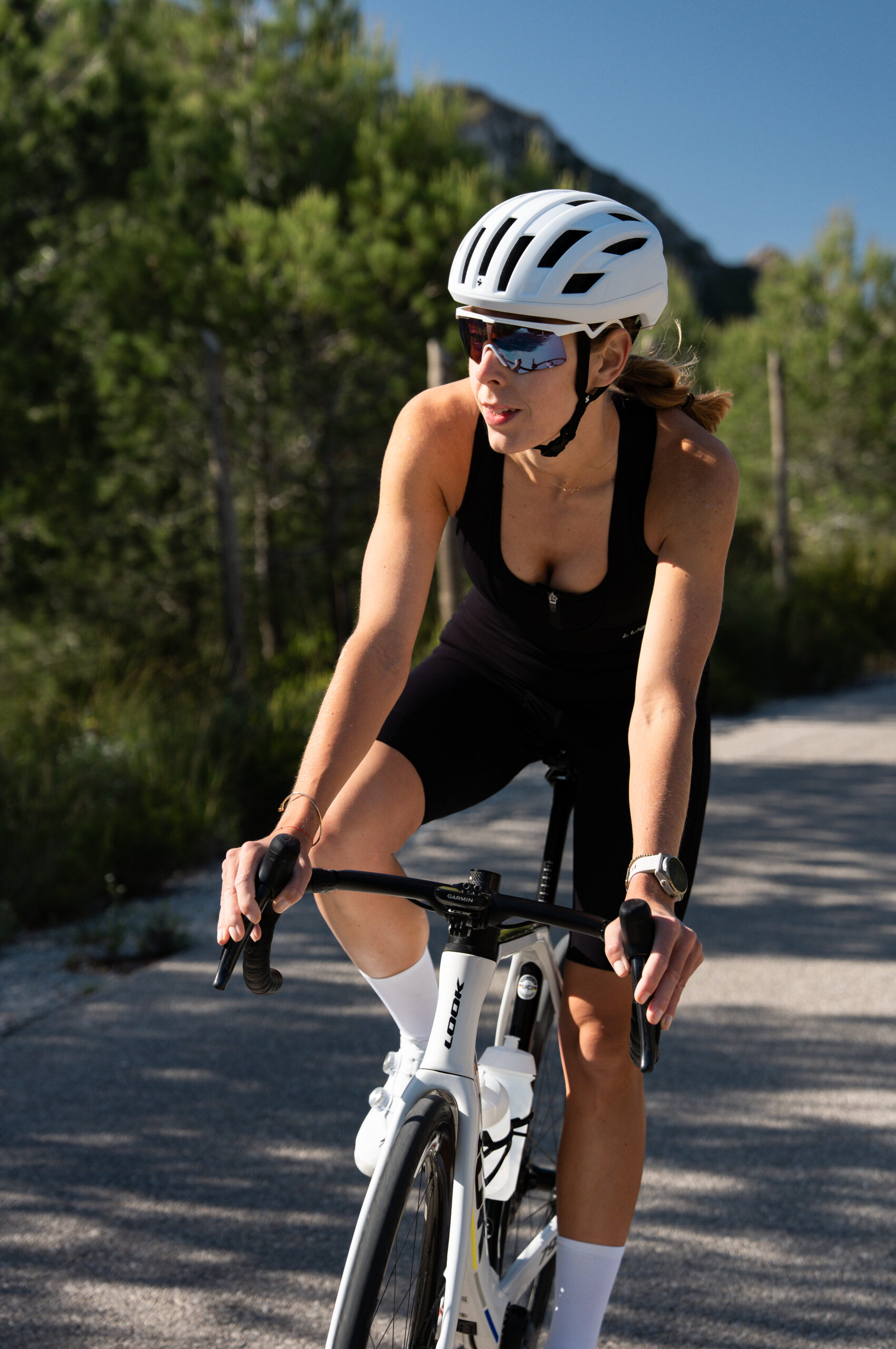
For Kuhn, the answer goes considerably deeper than aesthetics.
“A lot of brands start with a men’s pattern, grade it down, and adapt from there,” she explains. “The problems that creates for women are real and specific.”
Everything from the positioning of the chamois to waistband height, torso length, bib straps and even the accessibility of jersey pockets can change when clothing is designed around female anatomy. A chamois positioned for different anatomy can cause discomfort on longer rides, while bib straps designed around a flat chest and pockets positioned according to male proportions create problems that should arguably never have existed in women’s kit in the first place.
“LUCA starts from female anatomy and builds up from there,” Kuhn says. “It sounds like an obvious baseline.”
Technical credibility, however, is only one half of the LUCA equation.
Its Summer 2026 collection, Chase the Long Days, leans deliberately into the more pleasurable side of cycling: early starts, long summer evenings, café stops and the reward waiting at the end of a ride. Italian performance fabrics, sculpted silhouettes and breathable construction sit alongside a palette of Matcha, Aperol and Hibiscus.
For Kuhn, fashion and function were never competing ideas.
“They’re not in tension for me, they start from the same place,” she says. “The brief is always the woman wearing it: what does her body need over several hours in the saddle, and how does she want to feel when she is riding?”
Fabric comes first, followed by fit, colour and detail. The result is cycling wear that feels closer to the way women increasingly approach the rest of their wardrobes: technically appropriate, certainly, but still capable of expressing personality.
“Aperol. Hibiscus. Matcha. The names came before the Pantones in some ways,” Kuhn says. “They reference the moments that make a ride worth doing. The café stop, the thing you’ve been thinking about since kilometre forty.”
Her philosophy is perhaps best summed up by one line: “Cycling should feel like an invitation, not a uniform.”
TONE: Can cycling be about more than performance?
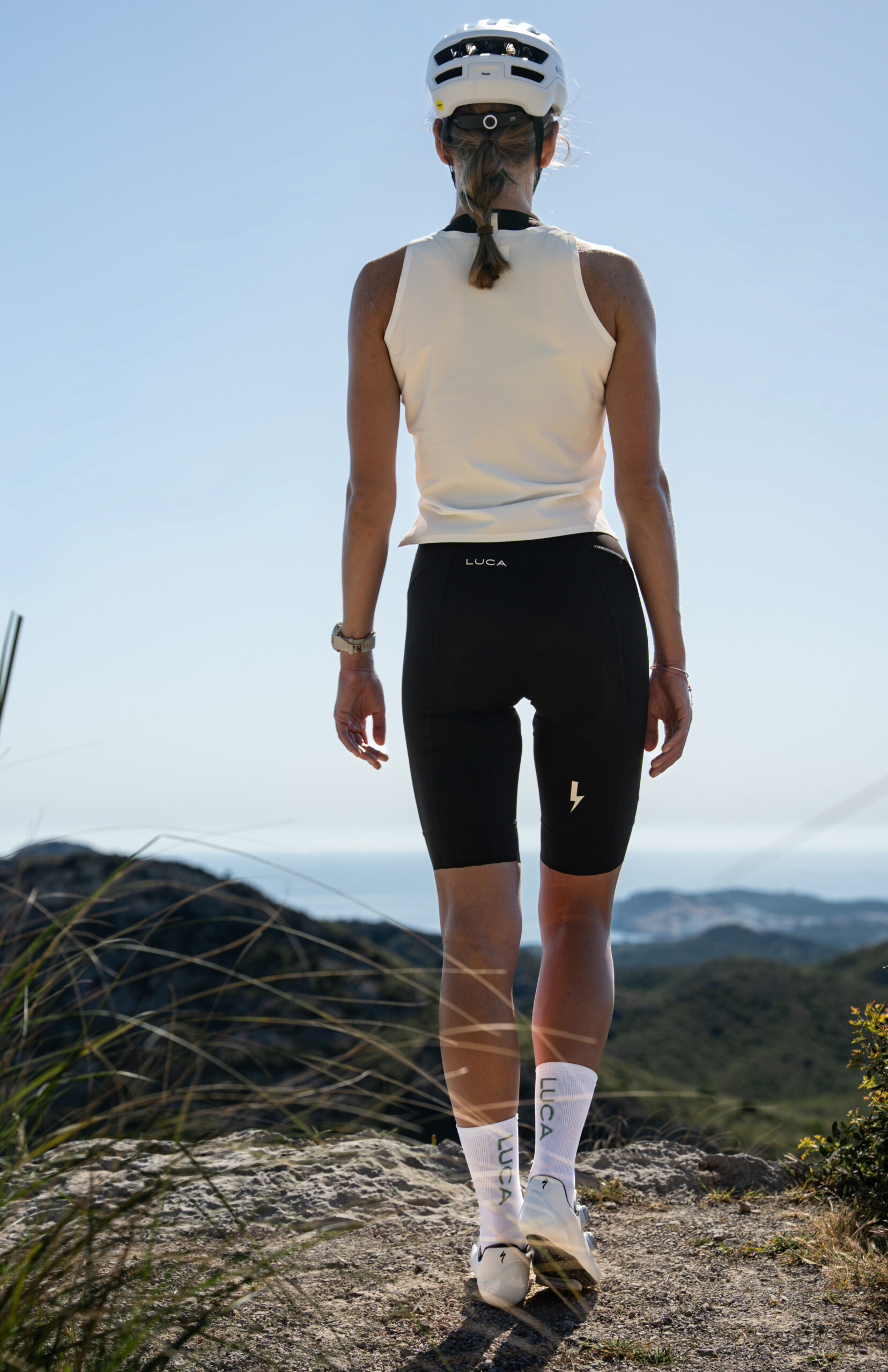
While LUCA sells clothing, Kuhn is equally interested in what happens when women wearing it find one another.
The brand hosts weekly rides in Richmond Park and Regent’s Park, alongside mechanic workshops, events and experiences designed to remove some of the barriers that can make cycling feel difficult to enter. LUCA also supports a grassroots U23 women’s race team, while its ambassadors include GB triathlete Siân Rainsley and GB track cyclist Neah Evans.
“The community was never separate from the brand, it’s the same thing,” Kuhn says. “I didn’t build the kit first and add the community as a marketing layer afterwards.”
That distinction matters. Rather than treating community as something to be built around an established product, LUCA has made it part of the brand from the beginning.
And what Kuhn has discovered is that while cycling may bring women through the door, it is often friendship that keeps them there.
“The rides are the hook, but what keeps people coming back is the people they meet,” she says. Women who arrived as complete beginners have become weekly regulars and close friends. “Kit matters, but it’s the door into something bigger.”
It also speaks to a wider evolution within cycling. Performance and competition remain important, but they no longer have to define participation. One LUCA customer might be training for a podium; another might be there for the Tuesday ride and the coffee afterwards.
“The ride is the occasion, not just the workout,” Kuhn says.
“The friendships you make through sport in adulthood are often the people you end up seeing the most, because you’re doing something together, week after week. That’s as real a part of cycling culture as the racing is.”
TONE: What does it really take to build an independent sportswear brand?
Behind the polished campaign imagery and considered product is a less glamorous entrepreneurial reality.
For an independent founder, building a premium sportswear label means competing for attention with global companies carrying decades of brand recognition and significantly larger advertising budgets. LUCA, meanwhile, is two years old and bootstrapped.
“Visibility without the budget to match the positioning,” Kuhn says of one of the greatest challenges she has faced.
“The economics are stacked against small brands in ways that aren’t always obvious from the outside.”
Large sportswear companies benefit from economies of scale, stronger margins, lower unit costs and greater negotiating power with manufacturers. Smaller labels frequently face the inverse: smaller production runs at higher costs, often with upfront payments and fewer opportunities to negotiate favourable terms.
Then there is the question of credibility.
“The other thing nobody tells you: being taken seriously when you’re small and new,” Kuhn says. Whether dealing with suppliers, stockists or potential partners, young businesses can spend an extraordinary amount of time simply earning the opportunity to enter the conversation.
“You spend a lot of time proving you’re worth the conversation before the conversation can start.”
Yet LUCA’s smaller scale is also central to the way Kuhn wants to build the business.
The brand operates a small-batch model with reorders determined by genuine demand, helping keep deadstock close to zero. Its pieces are manufactured in Portugal using premium Italian performance fabrics, with longevity treated as part of the sustainability conversation rather than simply a product benefit.
For Kuhn, one of activewear’s biggest environmental problems remains straightforward: overproduction.
“Fast fashion economics applied to activewear: massive runs, deep discounting, waste,” she says.
Her alternative is equally concise: “Make less, make it better, charge accordingly.”
TONE: How do you want women to feel when they wear LUCA?
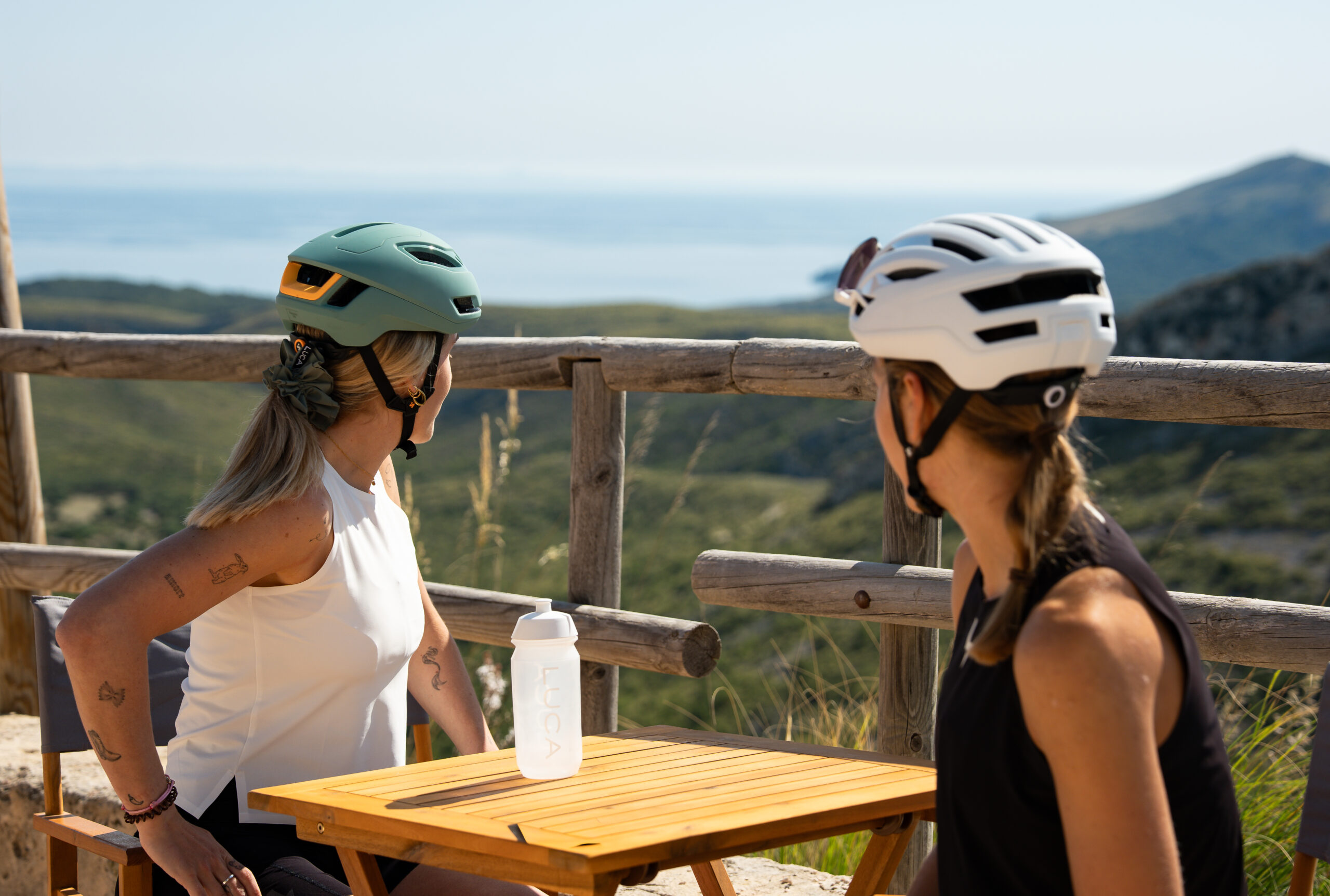
“Confident, comfortable, capable.”
Three words that neatly encapsulate what Kuhn has been building since LUCA began.
“The confidence comes from kit that fits properly,” she explains. “When something sits right on your body, you stop thinking about it and just ride.”
Comfort means clothing capable of disappearing into the background over a long day in the saddle. The best kit, in Kuhn’s view, is the kit you forget you are wearing.
But capable is the word she returns to most.
It also perhaps best explains LUCA’s proposition. The technical details matter. So do performance fabrics and female-specific fits. But so too do the Aperol-inspired colours, the coffee after a morning ride, learning to repair your first puncture and finding a new group of friends as an adult.
It is cycling without the suggestion that there is only one correct way to participate.
“I want women to get on the bike and feel like they can do the thing,” Kuhn says, “whatever the thing is.”
For a brand born from the feeling that something was missing, that might be LUCA’s most compelling measure of success.
LUCA is available to purchase here.
For similar articles, visit TONE Magazine LDN and our Interviews page.