When we think about household plastic waste, the usual suspects tend to be supermarket packaging, takeaway containers and endless plastic bottles. But there is another room in the home quietly contributing to the problem: the bathroom.
From shampoo and conditioner bottles to toothpaste tubes, deodorants, disposable razors and shower products, our daily routines rely on a surprisingly large number of plastic items. And because many of these products are relatively small, it is easy to overlook just how much waste they create over the course of a year.
Research commissioned by refillable personal care brand Fussy suggests that more than three in ten Brits throw away three or more single-use bathroom products every month. With so many of these items becoming part of our everyday routines, the bathroom could be one of the most overlooked areas when it comes to reducing household plastic waste.
Britain’s Bathroom Plastic Problem
The issue is not necessarily about one individual product. Instead, it is the cumulative effect of products that we repeatedly buy, use and throw away.
Finish a bottle of shampoo and another one takes its place. Run out of deodorant and the container is discarded. A toothbrush reaches the end of its lifespan and is replaced, while disposable razors can quickly accumulate in the bathroom bin.
Over a year, those seemingly insignificant decisions can add up to dozens of pieces of waste per person. And while recycling is an important part of dealing with plastic, not every bathroom product is straightforward to recycle. Small packaging, mixed materials and containers containing traces of product can all create additional challenges. That makes reducing the amount of plastic we use in the first place an important part of the conversation.
London’s Bathroom ‘Tossers’ Lead the Way
Fussy’s research also reveals significant differences across the UK.
London comes out on top, with residents reportedly throwing away an average of 45.6 single-use plastic bathroom items per person each year. The North West follows at 32.28 items, while the West Midlands records 31.92. Scotland sits at 30.48, with Wales at 28.68 and Yorkshire & the Humber at 27.24. Further down the list are the South East at 26.52, the East of England at 24.72 and the South West at 22.56.
The figures highlight just how much our everyday bathroom routines can vary across the country, but also demonstrate the scale of the opportunity. If even some of these disposable products can be replaced with reusable or refillable alternatives, the amount of waste generated over time could be reduced.
Fussy’s Refillable Approach
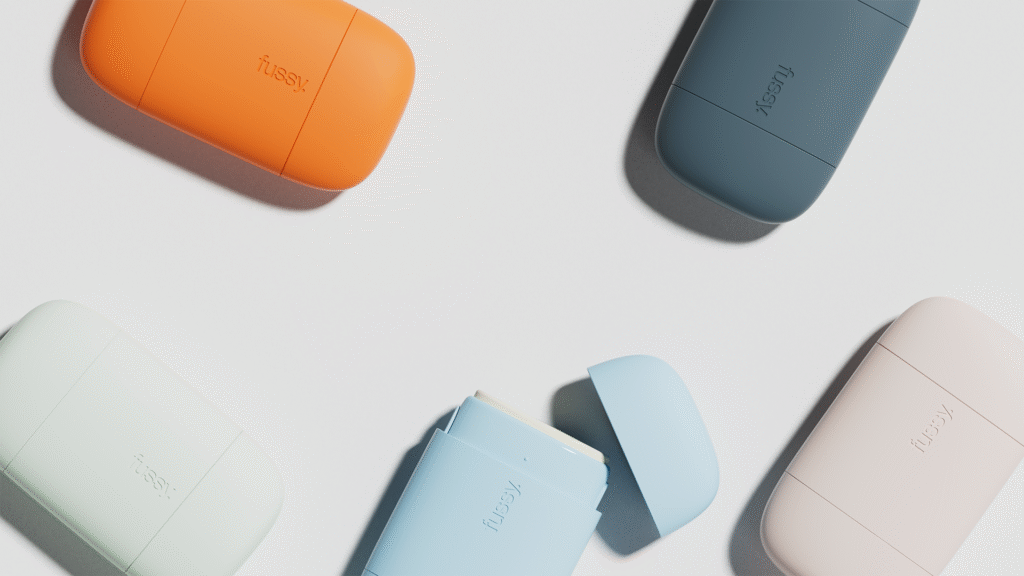
This is where Fussy is attempting to change the way we think about personal care. The brand’s USP is built around refillable personal care, creating products where consumers keep the main container and simply replace the product inside rather than throwing the whole thing away.Its refillable deodorant system is designed around exactly this principle. Rather than buying a new plastic deodorant container every time you run out, you keep the case and replace the refill.
The idea sits at the centre of Fussy’s Don’t Be A Tosser campaign, backed by Deborah Meaden, which challenges Britain’s throwaway culture and encourages people to rethink the products they routinely put in the bin. Importantly, the argument isn’t that consumers need to completely overhaul their lifestyles. Instead, the brand believes that small, repeatable changes can become part of an everyday routine. And that is where refillable products have an advantage: once the initial switch has been made, there is very little behavioural change required.

The Bathroom Swaps Worth Making
Deodorant is only one place to start.
For anyone looking to reduce the amount of plastic leaving their bathroom, there are plenty of relatively simple swaps to consider.
Refillable hand wash: Instead of continually buying a new bottle, refillable dispensers allow you to keep the same container and replenish the product inside. Fussy also offers refillable hand wash in a range of scents.
Refillable shampoo and conditioner: Shampoo and conditioner bottles are among the products many of us get through regularly, making them an obvious category to explore when looking for lower-waste alternatives.
Refillable body wash: The same principle can be applied in the shower, with refillable body wash providing an alternative to repeatedly buying new plastic bottles.
Toothpaste tablets: For those willing to change their routine, toothpaste tablets can eliminate the conventional plastic toothpaste tube altogether.
Reusable cotton pads: Swapping disposable cotton pads for washable alternatives is another small change that can prevent hundreds of individual pads from being thrown away over time.
Safety razors: Moving away from disposable plastic razors towards a reusable safety razor can also remove another regular source of bathroom waste.
Bamboo toothbrushes: For those looking for an alternative to conventional plastic toothbrushes, bamboo options can be another simple swap.
Small Changes, Bigger Impact
The reality is that nobody is going to transform their bathroom overnight, and they don’t necessarily need to. The most effective approach is arguably to look at the products you use most frequently and start there. If you finish a bottle of shower gel every few weeks, for example, that could be a better place to start than replacing a product you only buy once or twice a year.
The same applies to deodorant, shampoo, conditioner and hand wash. Products that are purchased repeatedly represent the biggest opportunity to reduce waste over the long term. It is also why the refillable model is becoming increasingly appealing. Rather than viewing sustainability as something that requires constant effort, refillable products make it part of the purchasing cycle itself.
The bathroom may not be the first place you associate with Britain’s plastic waste problem, but perhaps it should be. Because sometimes reducing your environmental impact isn’t about making a dramatic lifestyle change. It is simply about looking at what you throw away every month and asking whether you really need to throw it away at all.
For more on Fussy click here
For more recommendations, visit TONE Magazine LDN